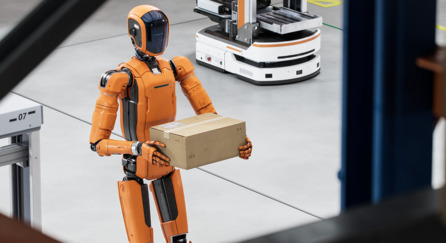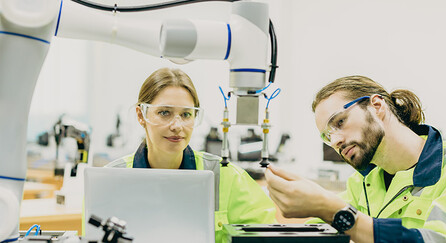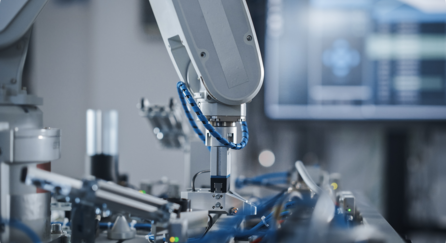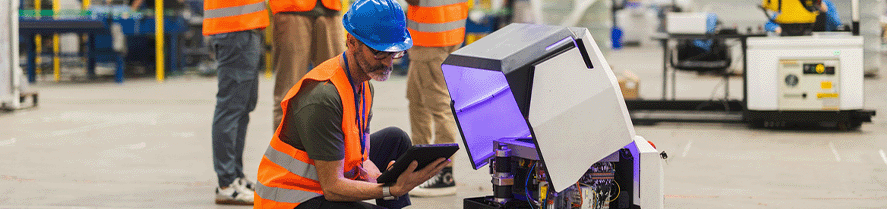
Building an effective robotics vision system should be achievable for teams of all sizes and budgets. As affordable 3D cameras become more widely available, startups, research groups, and smaller developers can now access advanced perception capabilities once reserved for larger programs.
However, choosing the right camera is not simply about selecting the lowest price. Performance requirements, deployment goals, and long-term project needs all influence the true value of an investment. This guide explores how to balance budget and capability when selecting a 3D camera for robotics applications.
- Budget and Performance in Robotics Vision
- Understanding 3D Camera Technologies and Price Points
- Hidden Cost of 3D Cameras in Robotics Applications
- Selecting the Right 3D Camera Tier for Your Project
- Essential Features Worth the Investment
- Maximizing ROI: Getting the Most From Limited Budgets
- Explore 3D Vision Cameras From Orbbec
- FAQ
Budget and Performance in Robotics Vision
Budget constraints are common in robotics development, but lower cost does not necessarily mean lower capability. The most effective investments come from selecting the level of performance that directly supports the application, rather than paying for specifications that provide limited practical value.
For many robotics projects, requirements such as usable range, measurement accuracy, environmental robustness, and software support matter far more than maximizing every headline specification. A camera with the right balance of performance and cost can often deliver stronger overall project value than a premium device with underutilized features.
A disciplined budget strategy also preserves resources for other critical areas, including software development, system integration, testing, and future iteration. In practice, successful robotics systems are built not by maximizing camera specifications alone, but by optimizing total project performance within available budget.
How to Approach the Selection Process
Choosing a camera is not just a cost decision, but a system architecture decision that affects compute, integration, and scalability. A careful, high-level strategy can keep costs under control and ensure optimal fit.
Begin by defining the robot’s operating conditions. Consider lighting, temperature ranges, dust and moisture exposure (including relevant IP requirements), vibration, and motion dynamics. These environmental factors will shape the vision system’s specifications.
Next, clarify the robot’s primary tasks, such as navigation, manipulation, or measurement, to understand the functional requirements imposed on the camera and its components.
Finally, align these technical and operational requirements with your available budget. This approach enables you to distinguish essential features from those you can adjust or trade off depending on application needs and cost constraints, ensuring your vision system supports both your goals and resources from the outset.
The Critical Role of 3D Cameras in Robotics Projects
Three-dimensional perception is a foundational capability in modern robotics. To navigate safely, manipulate objects accurately, and interact reliably with dynamic environments, robots must understand not only what an object is, but also where it is in space. This is the core limitation of conventional 2D vision systems, which capture color and shape but do not directly measure distance.
As a result, many important robotics functions—including bin picking, obstacle avoidance, pallet handling, localization, and mapping—either depend on depth sensing or require complex software workarounds when using 2D cameras alone. By providing direct spatial information, 3D cameras significantly simplify perception pipelines and improve system reliability.
A common misconception is that affordable depth cameras are inherently unsuitable for serious robotics use. In practice, many cost-effective models use the same underlying technologies as premium systems, including structured light, stereo vision, and time-of-flight sensing. The key differences often lie in range, robustness, onboard processing, integration features, and deployment readiness rather than depth sensing principles alone.
For budget-conscious projects, the most effective strategy is to match camera capability to application requirements. Robots operating in controlled indoor environments may not require industrial ruggedness or extended sensing range, allowing resources to be allocated to software, integration, or future scaling instead.
Understanding 3D Camera Technologies and Price Points
Different 3D camera technologies serve different performance requirements, deployment environments, and budget levels. Selecting the right solution depends on operating range, lighting conditions, motion dynamics, accuracy needs, and total project cost.
Structured Light Technology: Affordable Indoor Precision
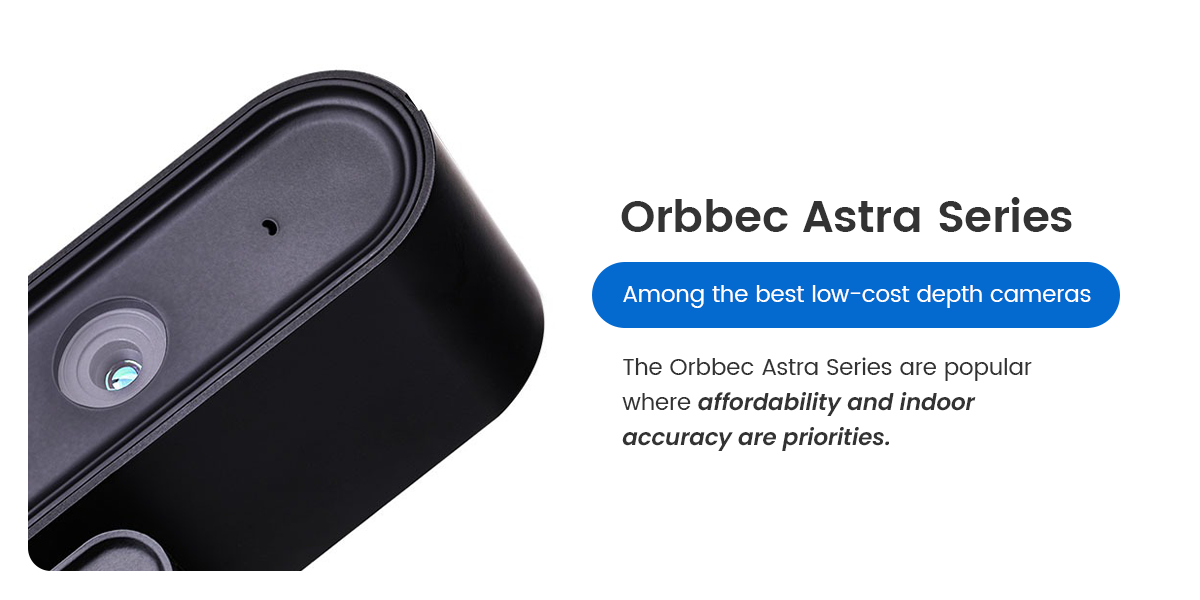
Structured light cameras project an infrared pattern onto a scene and estimate depth from pattern deformation. These cameras excel at capturing high-resolution and provide accurate depth data at short range, making them highly effective for tasks like bin picking, hand tracking, and general indoor navigation. They are often among the best low-cost depth cameras on the market. Cameras such as the Orbbec Astra Series are popular where affordability and indoor accuracy are priorities.
Stereo Vision: Flexible Range and Outdoor Capability
Stereo vision mimics biological sight by using two lenses spaced apart to triangulate distance. While more demanding in terms of image processing, stereo cameras shine in longer-range and outdoor scenarios, thanks to their ambient light tolerance.
The Orbbec Gemini Series exemplifies how teams can deploy stereo vision affordably in robust, flexible systems. These cameras are especially helpful when moderate sunlight resistance is necessary.
Time-of-Flight (ToF): Speed and Dynamic Performance
ToF cameras measure how long a burst of light takes to bounce off objects and return to the sensor. These cameras were once considered a luxury for top-tier products, but ToF sensors have become increasingly accessible while offering high frame rates, dynamic scene adaptation, and excellent performance in low-light conditions.
While often priced above entry-level structured light systems, ToF can provide strong value for demanding robotics applications.
Hidden Cost of 3D Cameras in Robotics Applications
While hardware pricing is often the primary focus when selecting a 3D camera, teams often overlook several hidden costs. In practice, these costs can have a significant impact on both development effort and long-term deployment, including system calibration, compute requirements (CPU/GPU), and system integration.
System Calibration Costs
System calibration, including sensor synchronization and extrinsic calibration, in industrial robot vision systems can introduce significant engineering overhead due to manual intervention, repeated measurement procedures, and workflow interruption. Orbbec’s system-level calibration expertise reduces these costs through mature workflows, proven tools, and reference implementations, enabling faster deployment and more reliable multi-camera and multi-sensor performance.
CPU/GPU Cost
Low-cost cameras can shift computational burden to the host system, where CPU or GPU resources will handle depth reconstruction, filtering, and pre- and post-processing. This capability increases system complexity, power consumption, and overall bill of materials. Direct user and developer experience of high CPU load when offloading RealSense D400-series depth processing to host systems, especially on Jetson Nano or similar platforms, is documented in Intel RealSense GitHub Issue #9236 and Issue #1699.
Orbbec cameras, however, integrate onboard SoC and ISP pipelines that perform these operations at the sensor level, offloading compute from the host. This integration reduces hardware requirements, simplifies system architecture, and lowers total system cost while preserving real-time performance.
Integration Cost
Integration is another frequently underestimated cost in robotics vision systems, spanning both hardware and software considerations. Real-time sensing, multimodal fusion, and platform interoperability can add significant engineering complexity.
On the hardware side, low-cost cameras may offer limited mounting options, constrained interface choices, and additional power requirements, often leading to extra adapters, cabling, or custom mechanical design. In contrast, Orbbec cameras support a wide range of industry-standard interfaces and configurations, with flexible mounting options and streamlined single-cable solutions (e.g., USB, GMSL, and PoE) that simplify both installation and system design.
On the software side, limited platform support can significantly increase development effort. Orbbec provides broad compatibility across x86, ARM, and AMD platforms, supports major operating systems including Windows, Linux, Ubuntu, and Jetson (JetPack), and offers SDKs for C/C++ and Python along with multiple wrappers. This comprehensive ecosystem enables faster integration, reduces development overhead, and lowers the total cost of deployment.
Selecting the Right 3D Camera Tier for Your Project
Selecting a 3D camera requires aligning technical needs with budget realities. Different project stages often justify different levels of investment, and choosing the right tier can maximize value while avoiding unnecessary cost.
Entry-Level Cameras
Entry-level models are well-suited for students, educators, hobbyists, and early proof-of-concept development. Devices such as the Astra Mini provide essential depth capabilities for learning, experimentation, and early Robot Operating System (ROS) development without significant hardware investment.
Midrange Cameras
Midrange cameras deliver noticeably better resolution, field of view, and sometimes onboard features. These cameras are best suited for academic research, advanced prototyping, and robotics startups iterating toward commercial viability. The additional investment covers features that may influence the success of more sophisticated robotic tasks.
Professional-Grade Affordable Cameras
Higher-tier systems emphasize durability, integration efficiency, and lower total system cost. Orbbec Cameras, such as the Gemini 2, usually include onboard ASICs processing that reduces host CPU requirements and improves deployment scalability. These solutions are commonly selected for commercial pilots, warehouse robotics, and real-world autonomous systems.
Essential Features Worth the Investment
Not all camera specifications deliver equal practical value. For robotics projects with limited budgets, the most effective investments are the features that directly improve deployment success, system efficiency, and long-term reliability. Prioritizing these areas helps avoid overspending on specifications that may offer little real benefit in the target application.
Resolution and field of view (FOV)
Higher resolution is not always better. Excessive image data can increase bandwidth, storage, and processing load without improving performance. A well-matched FOV can cover more workspace per sensor, potentially reducing the number of cameras required.
Onboard processing capability
A low-cost camera can shift depth processing to the host computer, and increase computation cost. Cameras with onboard ASICs, SoC, or ISP resources can lower host compute demand, reduce power consumption, and simplify system design.
Accuracy and range
Only pay for the range you need. If a robot operates within 2 meters, paying for extended long-range capability may provide little return
Software support and ecosystem
SDK quality, documentation, sample code, and platform compatibility can strongly influence development speed. A mature software ecosystem with excellent SDK support, like the Orbbec SDK, often saves substantial engineering time over the life of a project.
Durability and environmental fit
Ruggedized housings, sealed enclosures, and industrial connectors are valuable in demanding environments, but may be unnecessary for controlled indoor use. Invest in durability where deployment conditions justify it.
Maximizing ROI: Getting the Most From Limited Budgets
Making the most of your robotics budget depends on strategic choices. Focus on value, reliability, and future scalability to maximize return on investment.
1. Know when to choose entry-level
Start with affordable 3D cameras when experimenting, learning, or building early prototypes. This strategy reduces up-front risk and keeps costs predictable during iterative development.
2. Evaluate criteria for long-term value
Evaluate options by looking at reliability, expected service life, ease of maintenance, and vendor support. These factors can have greater financial impact than initial purchase price alone.
3. Plan for scalability
A unified camera ecosystem can simplify upgrades, preserve software investment, and reduce migration effort as project requirements grow.
The most cost-effective robotics vision systems are not always the cheapest to buy—they are the easiest to deploy, maintain, and scale successfully over time.
Explore 3D Vision Cameras From Orbbec
Achieving strong robotics vision performance within budget requires more than a low purchase price. It depends on selecting solutions that balance sensing capability, integration efficiency, long-term reliability, and future scalability.
Orbbec offers a broad portfolio of 3D cameras spanning prototyping, research, industrial automation, and production deployment. With mature SDK support, multiple depth technologies, and options across a wide range of performance and budget levels, teams can select solutions that match both technical requirements and investment goals.
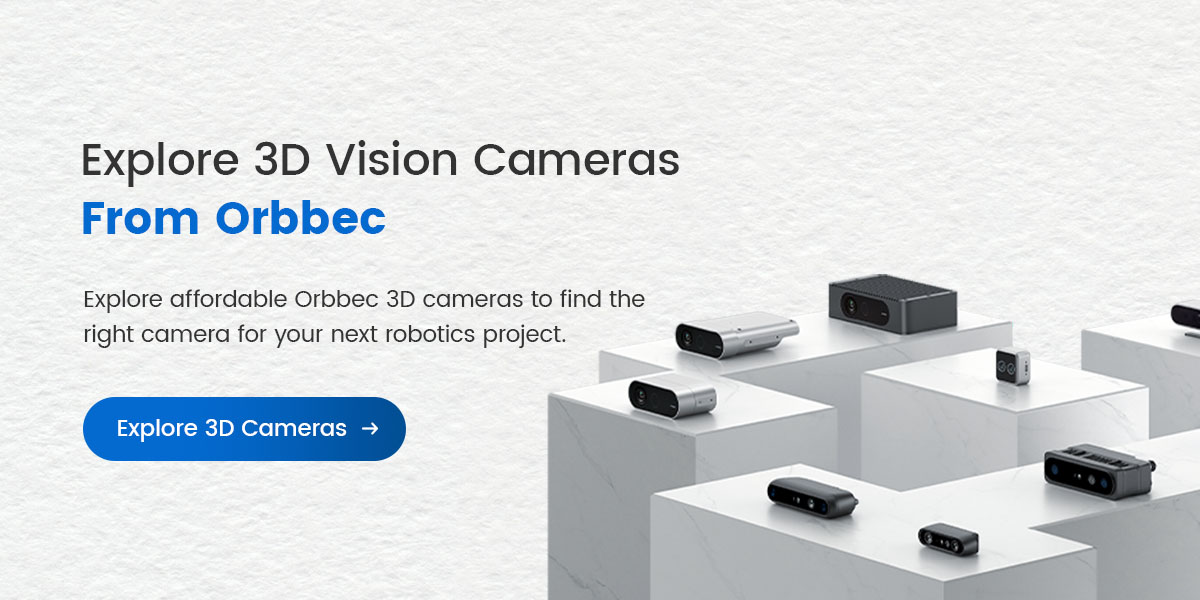
Explore affordable Orbbec 3D cameras to find the right camera for your next robotics project.
Frequently Asked Questions
What is the best affordable 3D camera for robotics?
The best affordable 3D camera depends on your application. For controlled indoor environments, structured light cameras such as the Orbbec Astra series offer strong depth accuracy at a low price point. For projects that require outdoor use or longer range, stereo vision cameras such as the Orbbec Gemini series provide more flexibility. Matching camera technology to your specific operating conditions is more important than selecting the lowest-cost option.
What is the difference between structured light and time-of-flight cameras?
Structured light cameras project a known infrared pattern onto a scene and calculate depth from pattern deformation. They deliver high accuracy at short range and perform well in controlled indoor environments. Time-of-flight (ToF) cameras measure depth by calculating how long a light pulse takes to return from a surface. ToF sensors handle fast-moving scenes and low-light conditions well, and are increasingly cost-competitive for robotics applications that require high frame rates or dynamic scene adaptation.
How much does a 3D camera for robotics cost?
Entry-level depth cameras suitable for prototyping and early development typically start below $100. Midrange cameras with better resolution, field of view, and onboard processing generally fall in the $200 to $600 range. Professional-grade cameras designed for commercial deployment range from several hundred to over a thousand dollars. Total project cost should also account for integration, calibration, and compute requirements beyond the hardware purchase price.
Do I need a depth camera for robot navigation?
Not always, but depth cameras significantly simplify navigation in most environments. Standard 2D cameras can be used for navigation with additional software processing, but they do not directly measure distance. Depth cameras provide spatial information that makes obstacle avoidance, localization, and mapping more reliable and easier to implement. For robots operating in dynamic or unstructured environments, a depth camera reduces pipeline complexity and improves system performance.
Can affordable 3D cameras be used in industrial robotics?
Yes. Many mid-range and professional-grade cameras use the same core depth sensing technologies as premium industrial systems. The key differences are typically in ruggedness, onboard processing, interface options, and long-term vendor support rather than fundamental sensing capability. Selecting a camera with onboard ASIC or SoC processing reduces host compute requirements, and choosing a vendor with broad SDK support and documented integration pathways lowers total deployment cost over the life of the system.