Inside Orbbec’s 3D Vision Industrial Manufacturing Base, a batch of rehabilitation robots has just rolled off the line—marking another successful delivery for the company’s robotics OEM services. As demand for therapeutic robotics climbs amid global aging trends and therapist shortages, Orbbec is proving that manufacturing know-how matters as much as vision technology.
The Rehabilitation Robot Opportunity
Rehabilitation robots blend robotic manipulators, multi-sensor perception, and AI algorithms to deliver precise, human-like therapy across hospitals, commercial wellness centers, and home care settings. The market is growing fast, fueled by aging populations, rising healthcare spending, and a shortage of trained therapists. But there’s a catch: many robotics startups hit a wall when moving from prototype to production scale.
Why These Robots Are Hard to Build
Manufacturing rehabilitation robots isn’t straightforward. The process demands intricate mechanical assemblies, precise sensor integration, and embedded intelligence—all meeting stringent quality standards. The electrical systems and upper manipulator structures prove especially tricky to assemble correctly.
According to Yiming, Production Line Manager at Orbbec’s robotics division, each robot delivered integrates assessment, diagnosis, treatment, and monitoring capabilities. With seven major subsystems—including the manipulator arm, human-machine interface modules, and industrial PC—each unit moves through 22 manufacturing steps from assembly to shipment.
Orbbec’s edge: modular parallel production. By manufacturing the manipulator arm, perception systems, control systems, and actuators as independent, sealed modules that run simultaneously, the production line achieves 20% faster assembly times compared to sequential workflows.
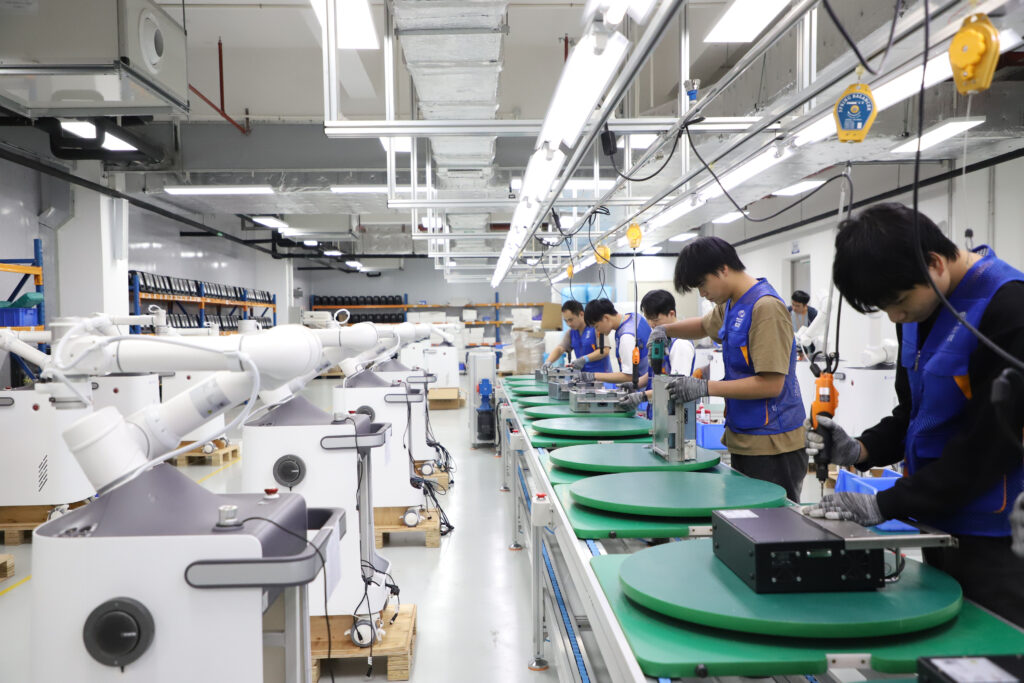
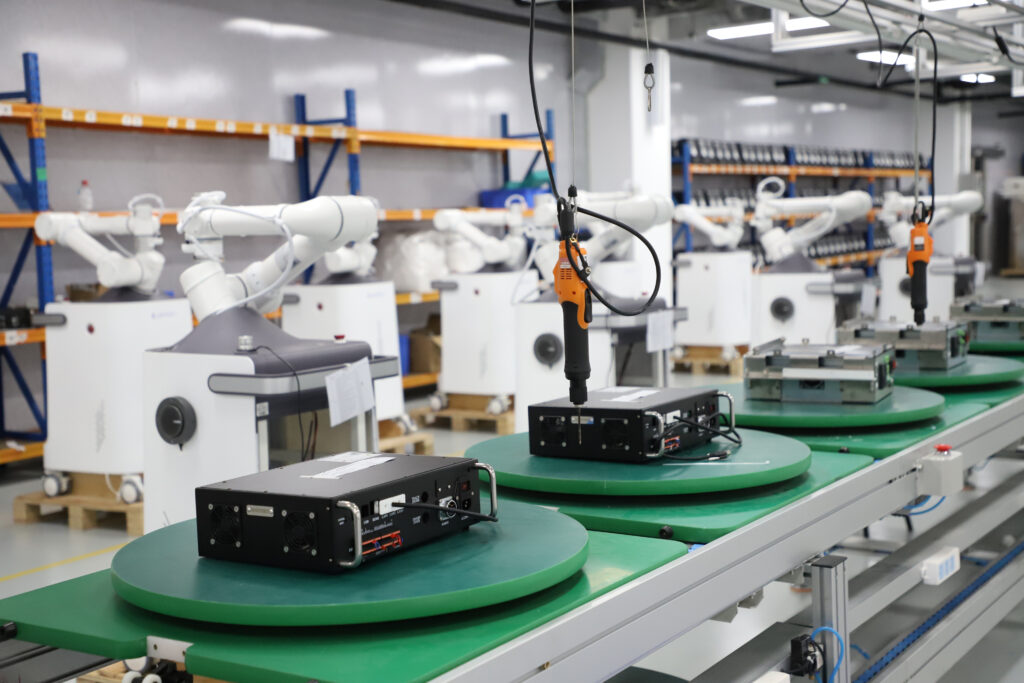
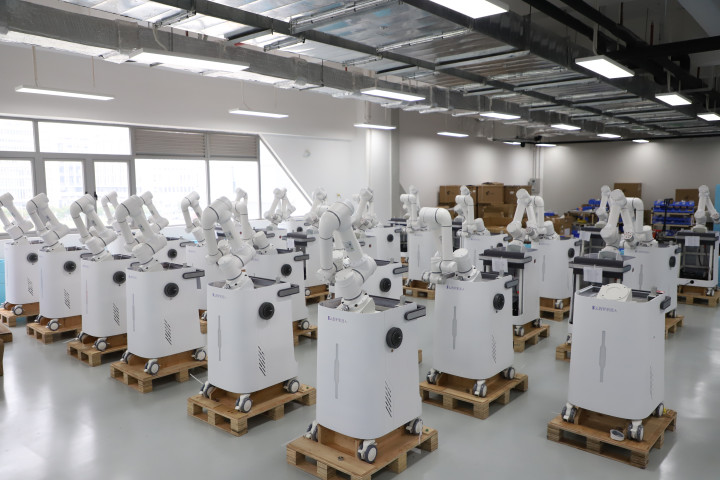
Orbbec’s Robotics Production Line
Why Robotics Companies Turn to Orbbec
“Many robotics companies thrive at design and R&D but lack their own production facilities and teams—making it tough to scale,” says Yiming. “With over a decade in 3D vision and robotics, we’re close to our customers and understand the industry deeply. We can quickly grasp what they need and deliver matching OEM support.“
Orbbec’s manufacturing base spans over 102,000 square meters, equipped for quality control, automated assembly, system commissioning, turnkey manufacturing, and supply chain integration. The facility provides flexible OEM services for complete robots or subassemblies across intelligent hardware sectors.
For rehabilitation robots and other robotic form factors, Orbbec delivers three core strengths:
- Expert Teams, Proven NPI Capability
Mechatronics teams bring hands-on experience in robot assembly, calibration and testing of critical optical components (depth cameras, LiDAR), and reliability validation. By baking “design for assembly, testability, and serviceability” into the front end, assembly and testing shift from post-production troubleshooting to upfront collaboration—helping customers reach production-ready scale. - Flexible Production Lines
Lines adapt to multiple product types, variable batch sizes, and phased orders. Custom test protocols and fixtures get built to match specific application requirements. - Rigorous Quality Control
Complete safety certifications and robust supply chain management underpin every project. A Manufacturing Execution System (MES) provides end-to-end digital tracking—making every process step visible, controlled, and traceable with validated quality metrics.
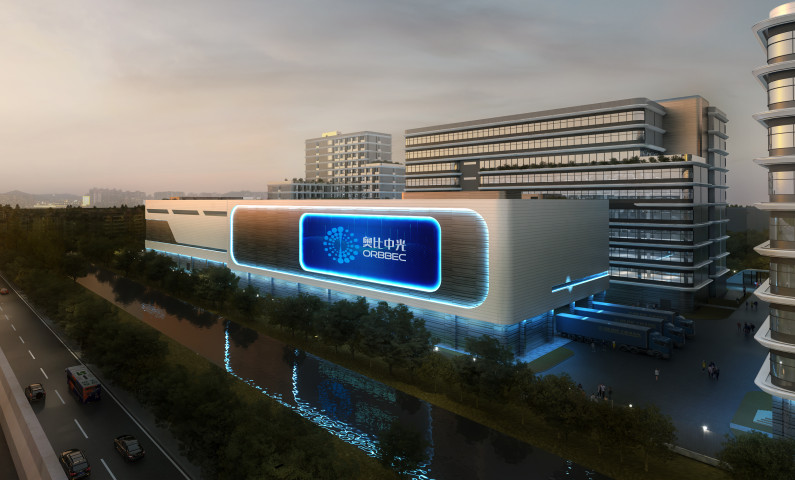
Orbbec’s 3D Vision Industrial Manufacturing Base
Proven Across Robot Categories
Orbbec now provides OEM services for rehabilitation robots, autonomous lawn mowers, humanoid platforms, warehouse AMRs, and cleaning robots—helping customers slash production costs and speed time-to-market.
Looking ahead, Orbbec aims to bridge the gap between innovation and industrialization by building an open, collaborative platform for the robotics and AI vision ecosystem. The goal: become the go-to OEM partner for robotics companies worldwide, speeding the journey from concept sketch to real-world deployment across industries.