About Neural Lab
Neural Lab, Inc. is an AI startup founded in 2021 and headquartered in Sunnyvale, California, built around one mission: AI that amplifies humans rather than replaces them. Its flagship product, AirTouch, is a patented technology that translates hand gestures into mouse, keyboard, or controller inputs using standard cameras—no headsets, no wearables, no special hardware.
AirTouch runs on Windows, Linux, and Android and is deployed across medical and sterile environments, shared kiosks, large-format displays and signage, and mixed-reality training, with collaborations spanning Barco, Sony XYN, Looking Glass, SeeCubic, and Avatar Medical. Neural Lab has demonstrated AirTouch on the show floors of CES 2024 and CES 2025, where its technology has drawn coverage from outlets including Engadget.
The Challenge: Lighting Is the One Variable You Cannot Control
Camera-based gesture control lives and dies by the quality of the image it sees. Most rooms are kind to cameras; the rooms where gesture control matters most are not. A dimmed theater, a west-facing storefront at sunset, a booth under dramatic show lighting—all of them degrade an RGB image before they degrade a demo. Reflective floors, spotlights, and direct sun throw artifacts that confuse RGB trackers, and a packed conference floor puts dozens of moving people behind the one person actually presenting.
Hand tracking that trusts only RGB fails exactly when the venue is at its most dramatic—which for Neural Lab’s customers in events, retail, and immersive entertainment is precisely when it needs to work. Closing that gap required a second sense: depth.
The Solution: RGB-First Tracking, Depth-Backed Robustness
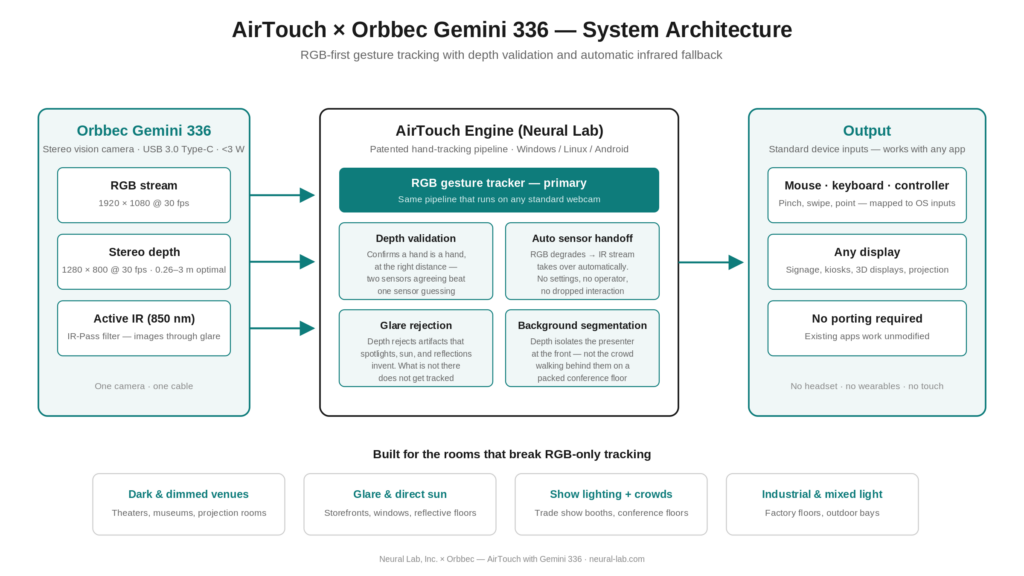
AirTouch × Orbbec Gemini 336 system architecture
AirTouch paired with the Orbbec Gemini 336 keeps Neural Lab’s patented RGB tracking pipeline as the primary stream and adds the camera’s stereo depth and infrared as validation and fallback, managed automatically with no operator intervention:
- Depth as the second opinion. The Gemini 336’s stereo depth runs alongside the RGB tracker, confirming that what looks like a hand is a hand at the right distance. Two sensors agreeing beats one sensor guessing.
- Automatic infrared takeover. When the RGB image degrades—a dark room, a blackout moment—AirTouch switches to the camera’s active-IR stream automatically. No settings, no dropped interaction: the room goes dark and the gestures keep landing.
- Glare, filtered out. The Gemini 336’s IR-Pass filter is purpose-built to image through spotlights, reflections, and strong sun, and AirTouch uses depth data to reject the artifacts glare invents. What is not physically there does not get tracked.
- One presenter, not the whole crowd. Because depth knows how far away everyone is, Neural Lab is extending the integration into background segmentation, so a demo station at a packed conference reads only the person at the front—not the fifty people walking behind them.
The pairing also carries a lineage both companies are proud of: Microsoft Kinect introduced the world to camera-based gesture control, and Orbbec carries that technology forward through the Femto Bolt, the Azure Kinect alternative. AirTouch running on an Orbbec camera is the next generation of that idea on today’s hardware.
Why the Orbbec Gemini 336
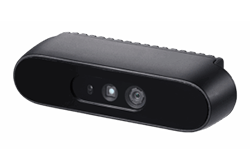
Neural Lab evaluated the Gemini 336 as its recommended and tested camera for hard-lighting deployments. The deciding factors:
- IR-Pass filter purpose-built for glare, bright scenes with shadows, and strong outdoor light—the exact conditions that break webcam-only tracking.
- Stereo depth with active IR (850 nm), depth to 20 m with an optimal range of 0.3–3 m—a natural fit for interaction distance at kiosks, booths, and displays.
- Full 1080p RGB at 30 fps alongside 1280 × 800 depth, so AirTouch’s primary RGB pipeline runs unchanged in good light.
- Practical deployment: indoor/outdoor rated, a single USB 3.0 Type-C cable, under 3 W, and 99 g—everything AirTouch needs on one cable.
Key Benefits
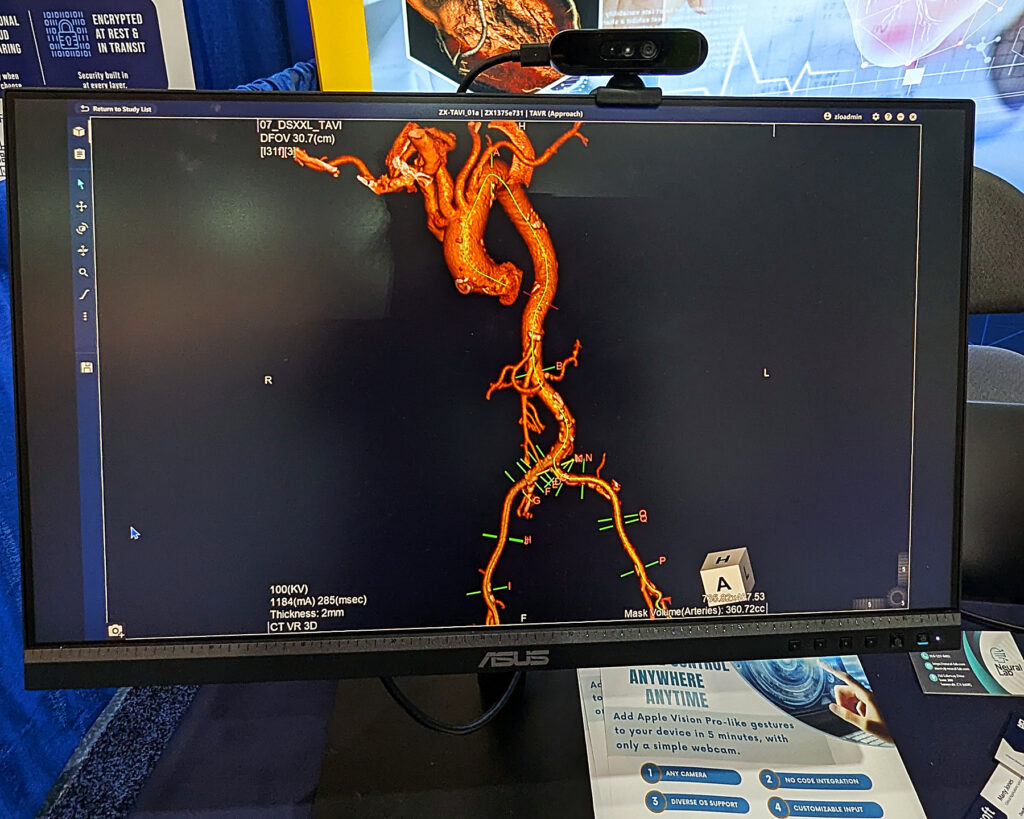
AirTouch gesture control on medical 3D imaging workstation
- Gesture control that keeps working in dark venues, under harsh glare, and in front of crowds—the three conditions that previously ended demos.
- Zero operator intervention: sensor handoff between RGB, depth, and IR is fully automatic. Plug in the camera and the right stream is used at the right moment.
- No compromise in good light: RGB remains primary, so deployments behave identically to standard-webcam installs until conditions turn hostile.
- Headset-free immersion: touch-free 3D interaction without donning/doffing, motion sickness, or per-user hygiene overhead—on hardware that costs a fraction of a VR setup.
- Simple to specify: one camera, one cable, three supported operating systems (Windows, Linux, Android).
In Their Words
“VR headsets sound good on paper; our customers tell us the rooms they demo in do not cooperate. Pairing AirTouch with the Orbbec Gemini 336 gave us the one thing pure RGB tracking could never promise—gestures that keep landing when the lights go down or the sun hits the glass. Kinect showed the world what camera-based gesture control could be. With Orbbec carrying that technology forward, we think this is its next generation.”
— Sherry Chang, CEO, Neural Lab
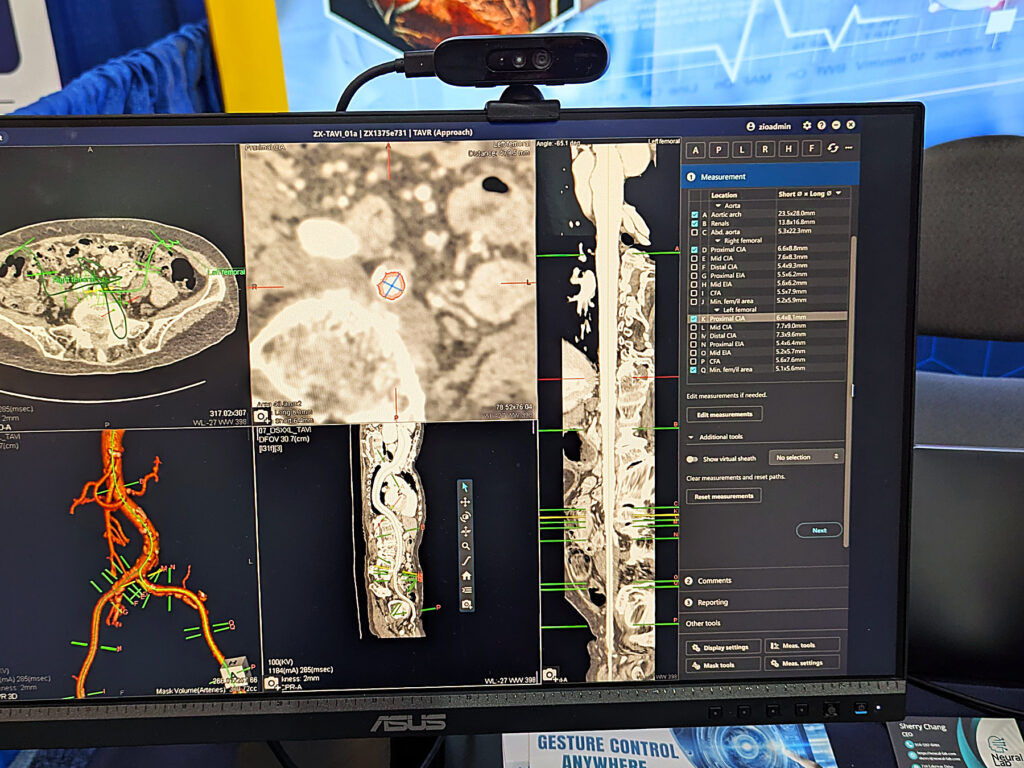
AirTouch touchless control on clinical imaging software
Future Outlook
Neural Lab is extending the depth integration into production background segmentation for conference and event floors, and now specs the Gemini 336 as the recommended camera for every hard-lighting AirTouch deployment—with full venue setups, camera included, offered to customers directly. As Orbbec carries the Kinect legacy forward in hardware, Neural Lab intends to carry it forward in software: making gesture the interface for any screen, in any room, under any light.